The Three-Dot Temperature Standard
Under international textile care classification, irons are calibrated around three universal soleplate temperature thresholds. These correspond directly to the dot dials found on domestic and professional steam irons alike:
Delicate Synthetics
Acetate, polyacrylic, polyamide (nylon), and spandex. Ironing without a protective cloth risks fiber melt. Never apply aggressive steam at this setting.
Wool, Silk & Blends
Worsted wool, polyester-cotton weaves, silk taffeta, and rayon. Moderate steam and a press cloth prevent shiny press marks on pocket flaps and lapels.
Heavy Cottons & Linen
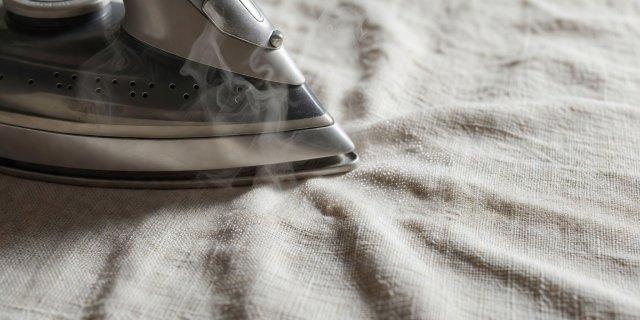
Pure flax linen, heavy twill denim, bed damask, and cotton canvas. Requires damp fabric or generous steam pressure to relax stubborn cellulose creases.
Steam Invalidation and Press Cloth Mechanics
Certain fabrics withstand dry heat but buckle under moisture injection. When an iron glyph features steam lines emanating from its base crossed out with an "X", you must press dry without burst steam. Moisture can cause water spotting on raw silk or distort crêpe weaves.
| Ironing Symbol Glyph | Soleplate Maximum | Steam Allowed? | Recommended Technique |
|---|---|---|---|
| Plain Iron (No dots) | Up to 200°C | Yes | General domestic pressing without restrictions. |
| Iron with 1 Dot | 110°C | No steam advised | Press on reverse side using low pressure. |
| Iron with 2 Dots | 150°C | Moderate steam | Use damp muslin press cloth over seam lines. |
| Iron with 3 Dots | 200°C | Full steam blast | Press while garment remains slightly damp from wash. |
| Iron with Steam Crossed | Variable by dots | Strictly prohibited | Dry iron only. Water causes bubble blisters on coatings. |
| Iron Crossed Out Entirely | None | No | Do not iron. Use steam wand at distance if necessary. |
Preventing the Dreaded "Iron Shine"
When wool suiting or dark synthetic trousers are pressed with excessive pressure directly on their face side, surface fibers are flattened into mirror-smooth planes that reflect light as an unsightly shine. Always press garments inside-out, or place an untreated white cotton press cloth between the iron soleplate and the garment face.